
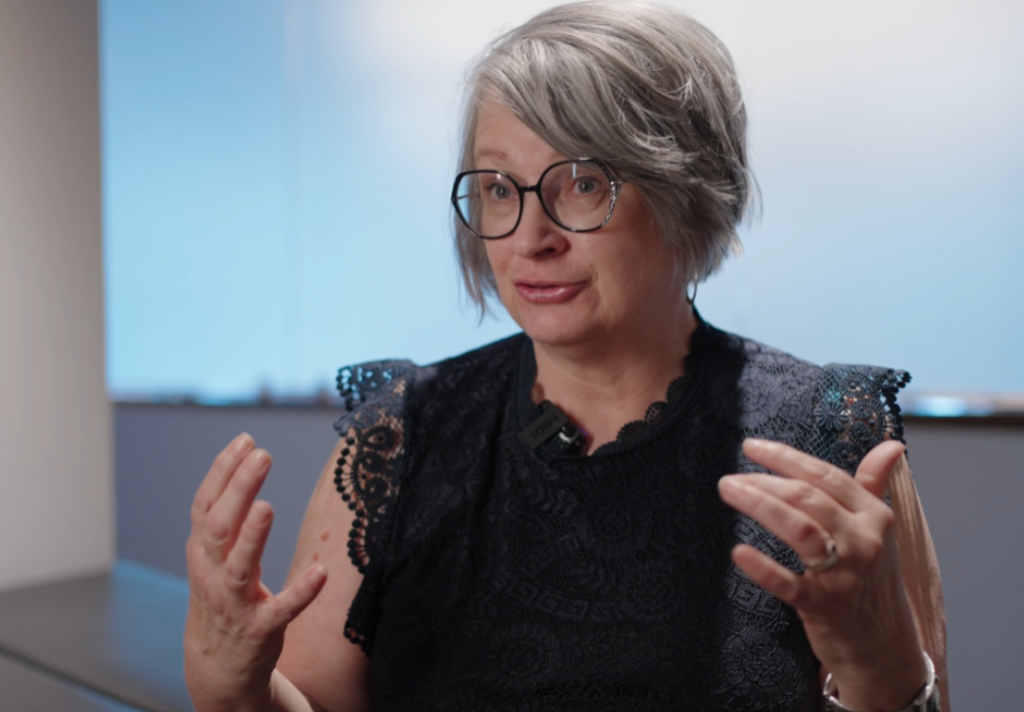
Lili Plourde has been working in the field of autism for over two decades, contributing to major shifts in how autism is understood, supported, and represented in Québec.
Today, as Executive Director of the Fédération québécoise de l’autisme (FQA), she leads a provincial network of organizations dedicated to promoting the rights and well-being of autistic individuals and their families, while strengthening knowledge sharing across Québec. Her work is grounded in advocacy, collaboration, and a commitment to ensuring that services, research, and policies reflect lived and living experience.
As a member of TACC’s Community Engagement Committee, she contributes to shaping the network’s direction by bringing forward community perspectives and helping ensure that research remains connected to real-world needs.
Reflecting on her involvement in both TACC and the FQA during the 2025 Annual TACC Member Assembly, Lili highlights the importance of collaborating directly with the autistic community to better align research and services with lived realities. (Production: Noah Leon)
What gaps in knowledge or services are most urgent to address in autism today?
Plourde: In Quebec, as in many other jurisdictions, knowledge about the needs of autistic people remains fragmented, especially beyond childhood. The transition to adulthood, and later aging, are major blind spots in research.
The lack of evidence on aging is particularly concerning. We know that autistic individuals will experience age-related conditions (chronic illness, loss of autonomy, isolation), often with added risk factors: difficulty accessing services, late or absent diagnoses, and healthcare systems that are not adapted to their sensory and communication realities. Without solid data, it becomes difficult to plan appropriate services or anticipate future needs.
How has your work in autism evolved over time, and what continues to drive your commitment today?
Plourde: I have been working in autism since 2003, when I became the director of Autisme Québec, an association of parents and autistic individuals – the same year Québec introduced its first autism action plan.
Our understanding of autism has evolved significantly since then, and autistic individuals are increasingly included in decision-making processes. Their voices are being heard more and more.
In 2021, I became the director of the Fédération québécoise de l’autisme, so that I could continue advocating for the rights of autistic people and their families and help ensure that everyone has access to services that meet their needs.
What changes are most needed right now for autistic individuals and their families, and how is your work contributing to them?
Plourde: Currently, the situation is difficult for both autistic individuals and their families. We are witnessing significant cuts to services. Adults are increasingly being left behind by the health and social services system, and there is still a great deal of misunderstanding and discrimination toward autistic people, especially those with lower support needs.
Through our various actions, we hope to amplify the voices of autistic individuals among decision-makers, to ensure their needs are recognized and that their inclusion across all environments becomes a reality. We also hope the government will hear the voices of exhausted caregivers.
How has your involvement in TACC influenced your work?
Plourde: My participation in TACC has allowed me to move beyond an isolated approach to research and become part of a collaborative and multidisciplinary network. Exchanges with researchers from diverse backgrounds have enriched my understanding of autism-related issues by incorporating complementary perspectives (clinical, social, educational).
This has influenced how I design my projects, placing even greater emphasis on co-creating knowledge, interdisciplinarity, and the tangible impact of research on autistic individuals and their families.