
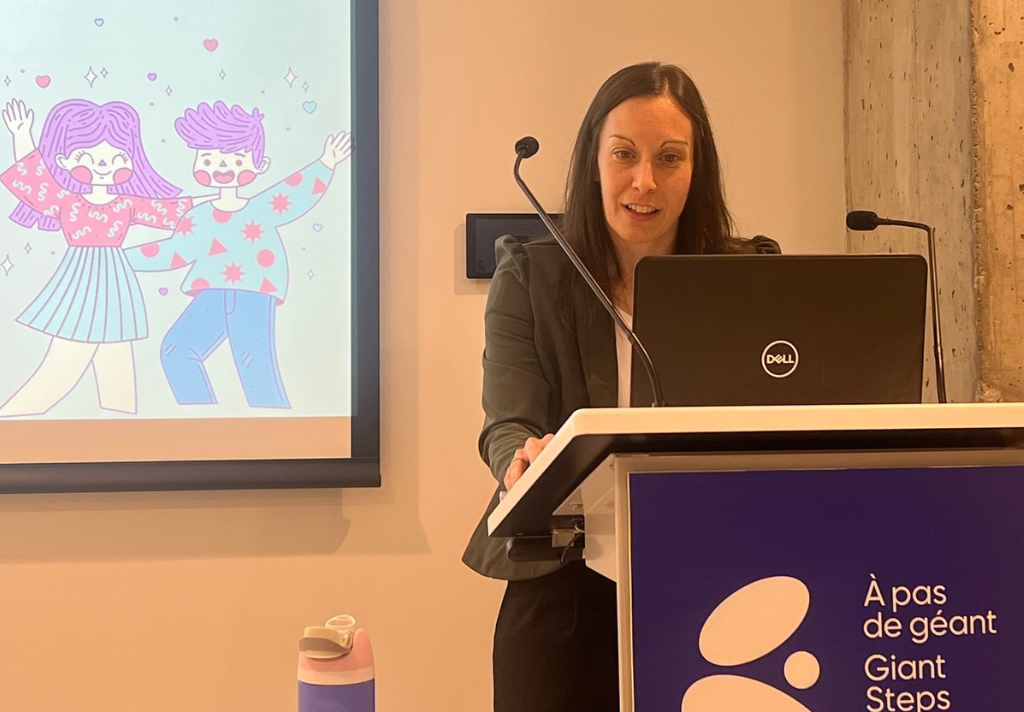
Sophie Higgins is a professor at the School of Psychoeducation at the Université du Québec en Abitibi-Témiscamingue (UQAT) and an affiliated researcher at the Institut universitaire en déficience intellectuelle et en trouble du spectre de l’autisme (Institut DI-TSA). Her research focuses on the relationships and sexual well-being of autistic people and people with intellectual disabilities (ID).
A regular member of TACC since 2023, she develops sexuality education programs and resources that respond to the needs of individuals and service providers. She is also collaborating with the Giant Steps Living Lab to adapt the Connexion Spectrum program for secondary school students.
Following her October 29, 2026 presentation as part of the Giant Steps Living Lab Learning Series, we spoke with Higgins about her research, the needs identified by young people, and her collaborations with service providers.
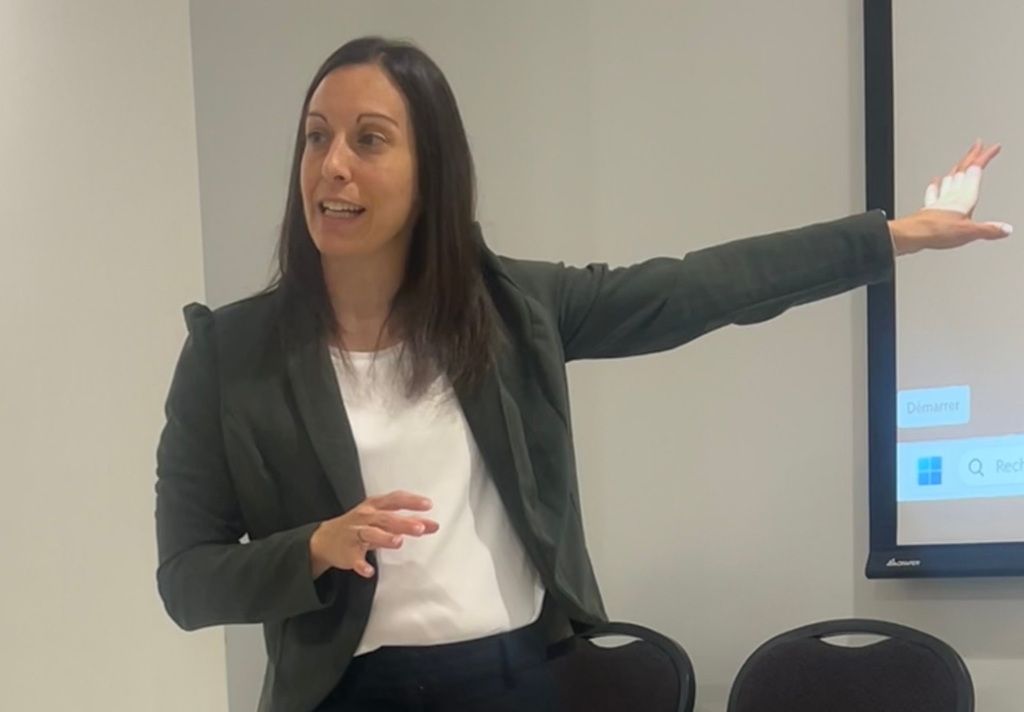
Sophie Higgins discusses her research on sexuality education for autistic people and people with intellectual disabilities, along with practical resources developed in collaboration with service providers.
What sparked your interest in sex ed?
Higgins: My interest in sexuality education for autistic people and people with ID grew out of my clinical practice and research with people with intellectual disabilities who exhibited inappropriate sexual behaviours.
As a clinician, I saw how difficult it could be for service providers to respond to these situations and how often they felt unequipped to do so.
Sexuality education is essential both for preventing these behaviours and supporting rehabilitation. As I developed my expertise, I became increasingly interested in supporting the broader relationship and sexual well-being of autistic people and people with ID. This led me to pursue research in sexuality education.
What do young people need from sexuality education?
Higgins: As part of a research project, a group of autistic young adults emphasized the importance of having access to a healthy relationships and sexuality education program tailored to their needs.
Participants wanted more attention given to the relationship and social-emotional aspects of sexuality, including everyday romantic relationships, dating and attraction, understanding people’s intentions in relationships, cultural differences, relationships between neurotypical and neurodivergent people, gender diversity, different ways of experiencing sexuality, and the legal aspects of sexual behaviour.
They also expressed a need for programs that combine theoretical knowledge with practical activities to support learning.
Another group, made up of people with ID, identified similar needs, particularly around relationship skills, navigating different stages of relationships, such as breakups, and sexuality. They wanted more specific and detailed information on these topics. They also highlighted the value of images, videos, interactive activities, and visual supports, such as comic strips, to help them learn.
These consultations revealed a significant lack of programs that reflect the current realities of autistic adolescents and adults and people with ID. Existing resources do not always keep pace with changing social and sexual norms or new technologies.
What projects are you working on to address these needs?
Higgins: Two of my main research projects focus on developing sexuality education programs for different audiences:
- Connexion Spectrum is designed for autistic young adults aged 18 and older. The project includes developing a training program for service providers. It is currently in the implementation phase and is expected to be available soon in both English and French.
- Moi, ma sexualité, mes choix (My Sexuality, My Choices) is designed for adolescents and adults aged 12 and older with intellectual disabilities. The program is still in development and is currently available only in French.
How does your collaboration with the Giant Steps Living Lab contribute to your research?
Higgins: I want to better understand the needs and realities of schools when it comes to sexuality education for autistic students and students with ID. The goal is to co-develop adapted, ready-to-use resources that make it easier for educators to deliver sexuality education in the classroom.
How are you making these resources easier for service providers to use?
Higgins: We are developing ready-to-use sexuality education workshops that can be delivered individually or in groups. The workshops are organized into four thematic modules, each containing three to five sessions, to allow for greater flexibility.
This approach allows facilitators to select the workshops that best meet young people’s specific needs. Each workshop includes presentation materials, activities, and an information sheet to share with family members and other people close to participants. This ready-to-use format responds to a need frequently expressed by service providers.
Additional resources
- Chacun son corps (To each their own body)
- SantéBD: Visual resources that make health information easier to understand and discuss.
- Clinical Ressources (training materials and handout) related to sexuality
- Oser être soi et respecter son partenaire… ça s’apprend ! (Learning to Be Yourself and Respect Your Partner): An article from the Institut universitaire en DI-TSA about the Connexion Spectrum program.
Learn more and connect
Professor Sophie Higgins welcomes inquiries from people interested in learning more about her research, sexuality education programs, or opportunities to collaborate with service providers.
You can contact her at sophie.higgins@uqat.ca, or visit her UQAT profile or LinkedIn page to learn more about her work.